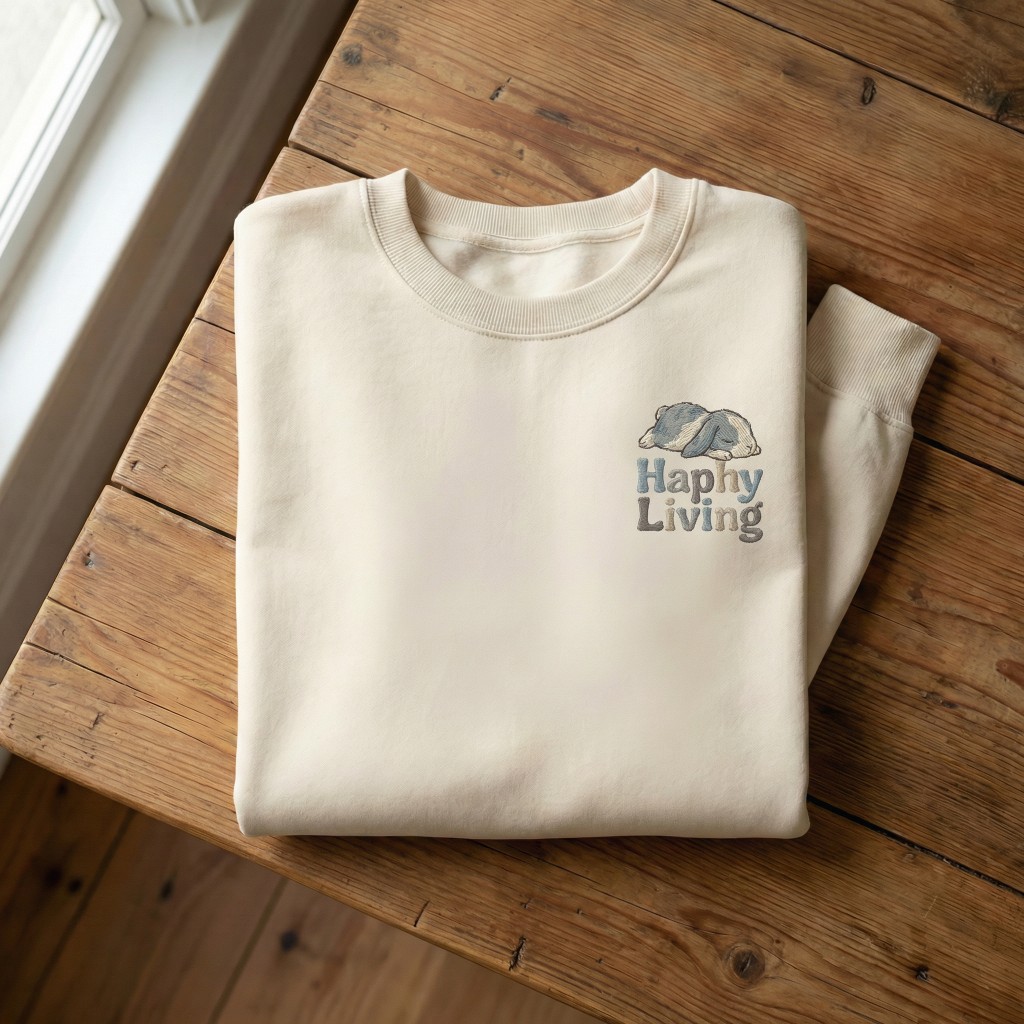
Building a pet-lifestyle brand IP from scratch
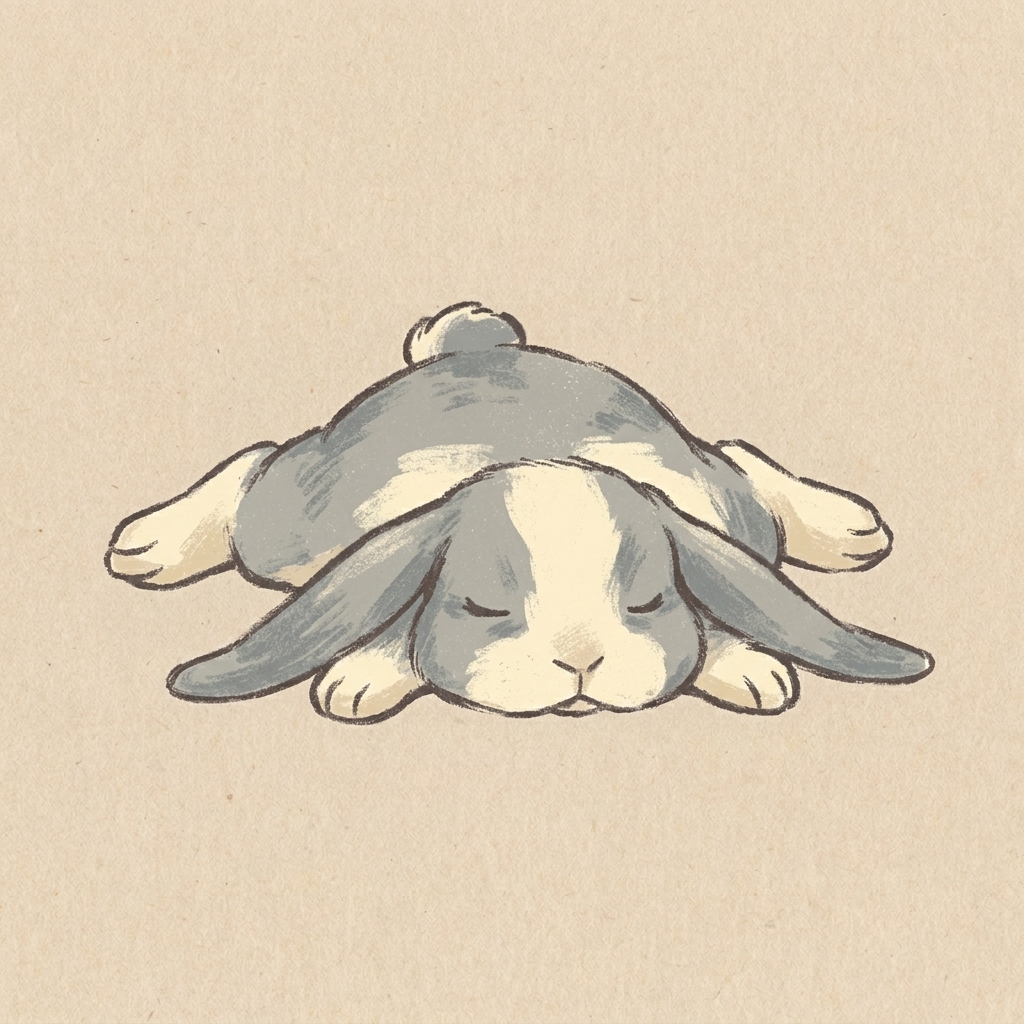
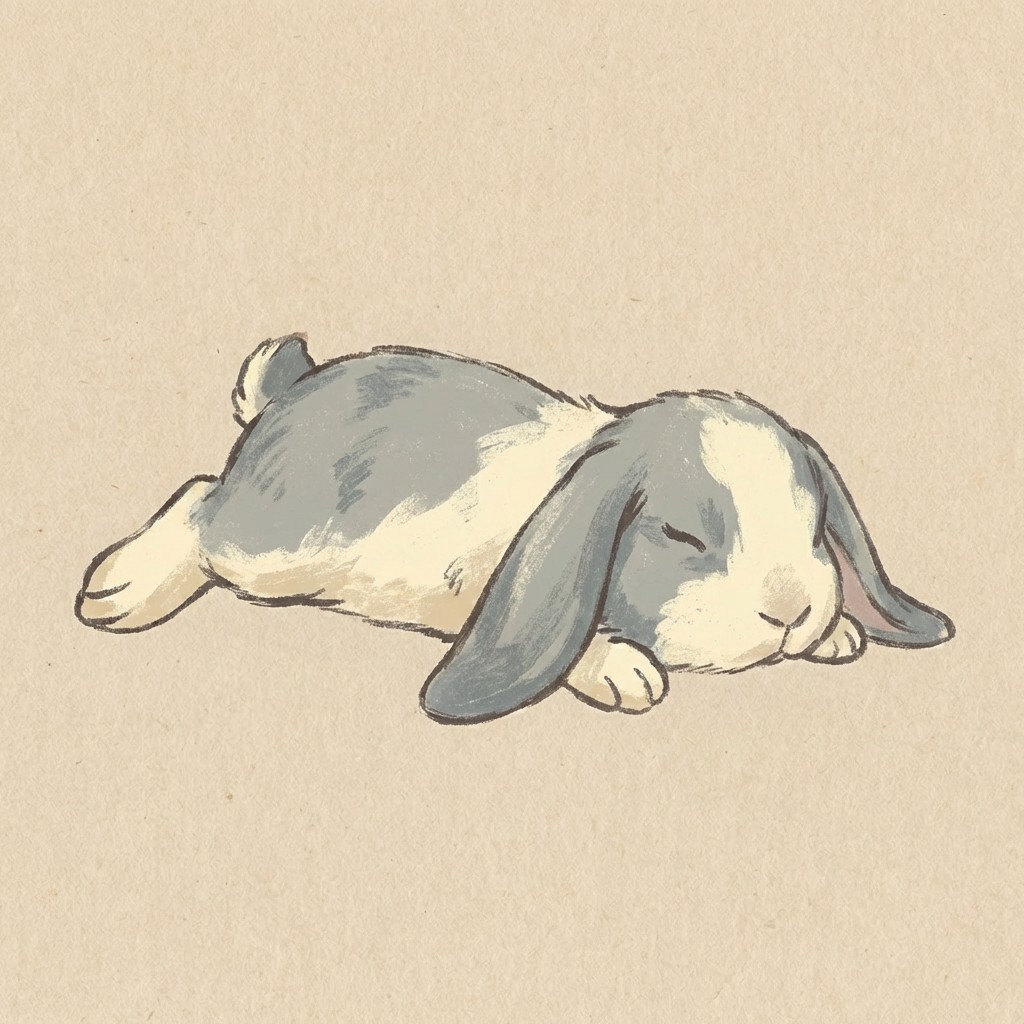
Haphy Living started as a personal project: turn my Holland lop rabbit into a brand. No client, no brief — just a blank page and a point of view. I owned everything: identity, artwork, product line, shop, and marketing.
Cozy, a little mischievous, unmistakably ours
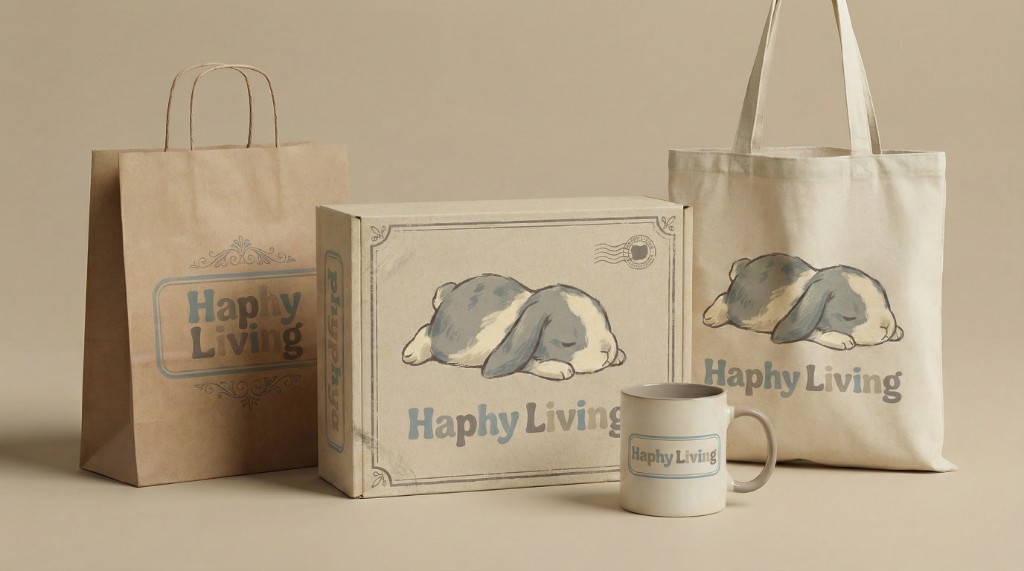
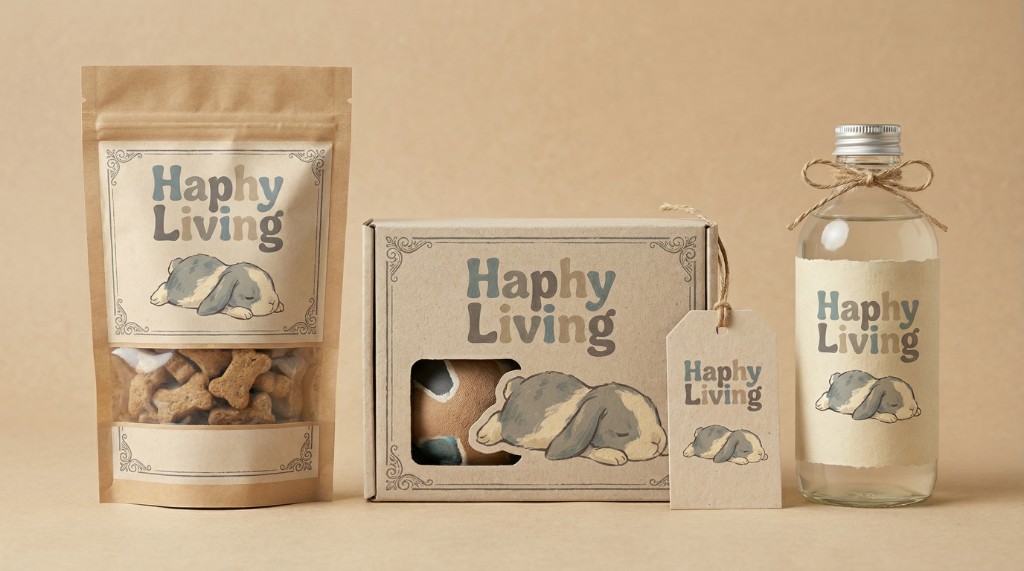
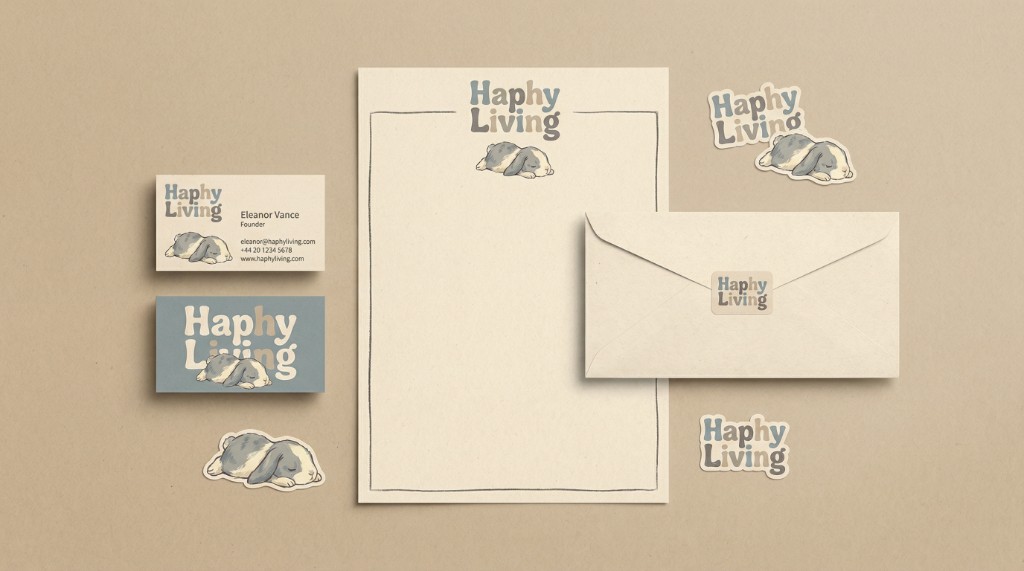
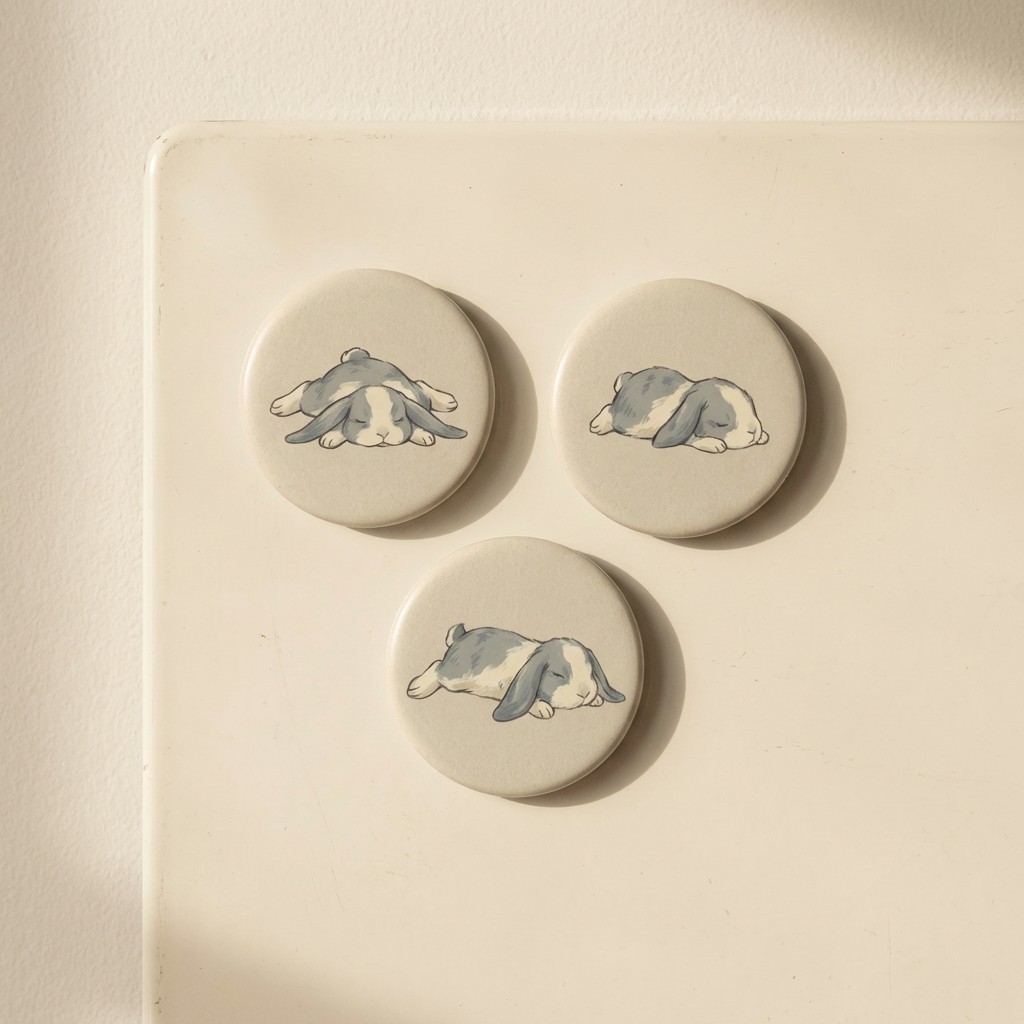
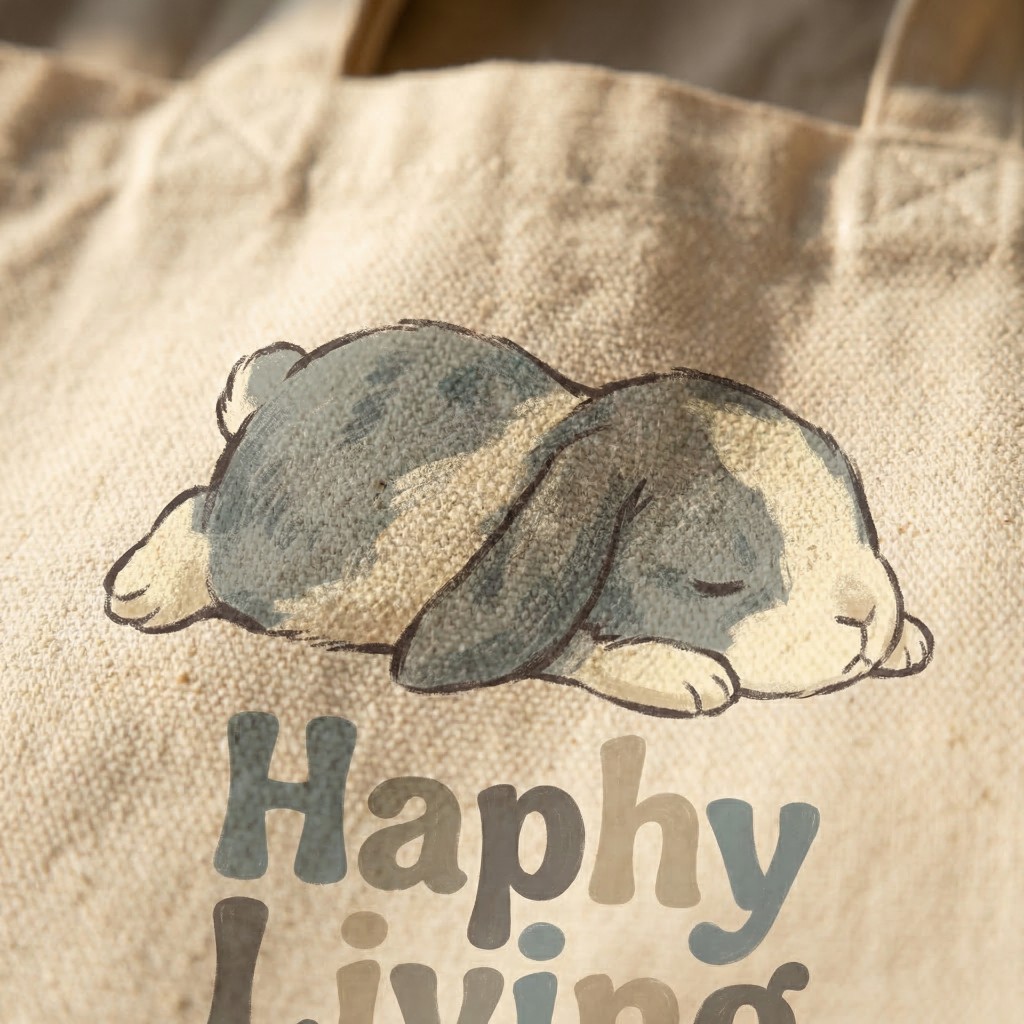
A full identity system around one idea: a hand-drawn mascot with a consistent personality across poses and seasons; a warm, earthy palette that holds from a 3-inch pin to a wall-sized art print; a logo and wordmark flexible enough for packaging, tags, and social avatars.
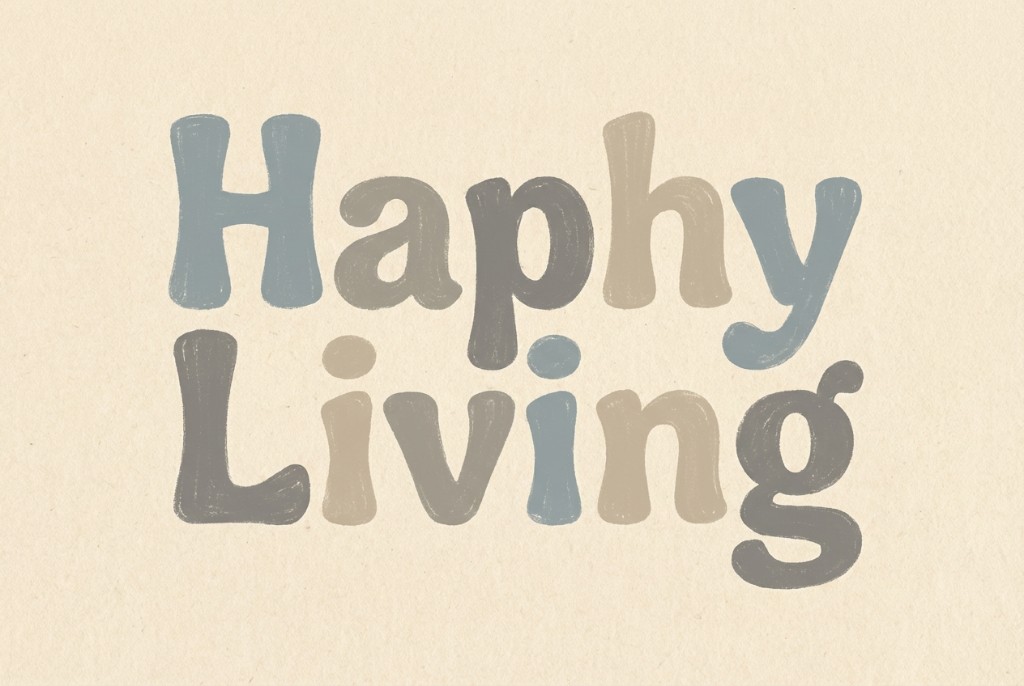
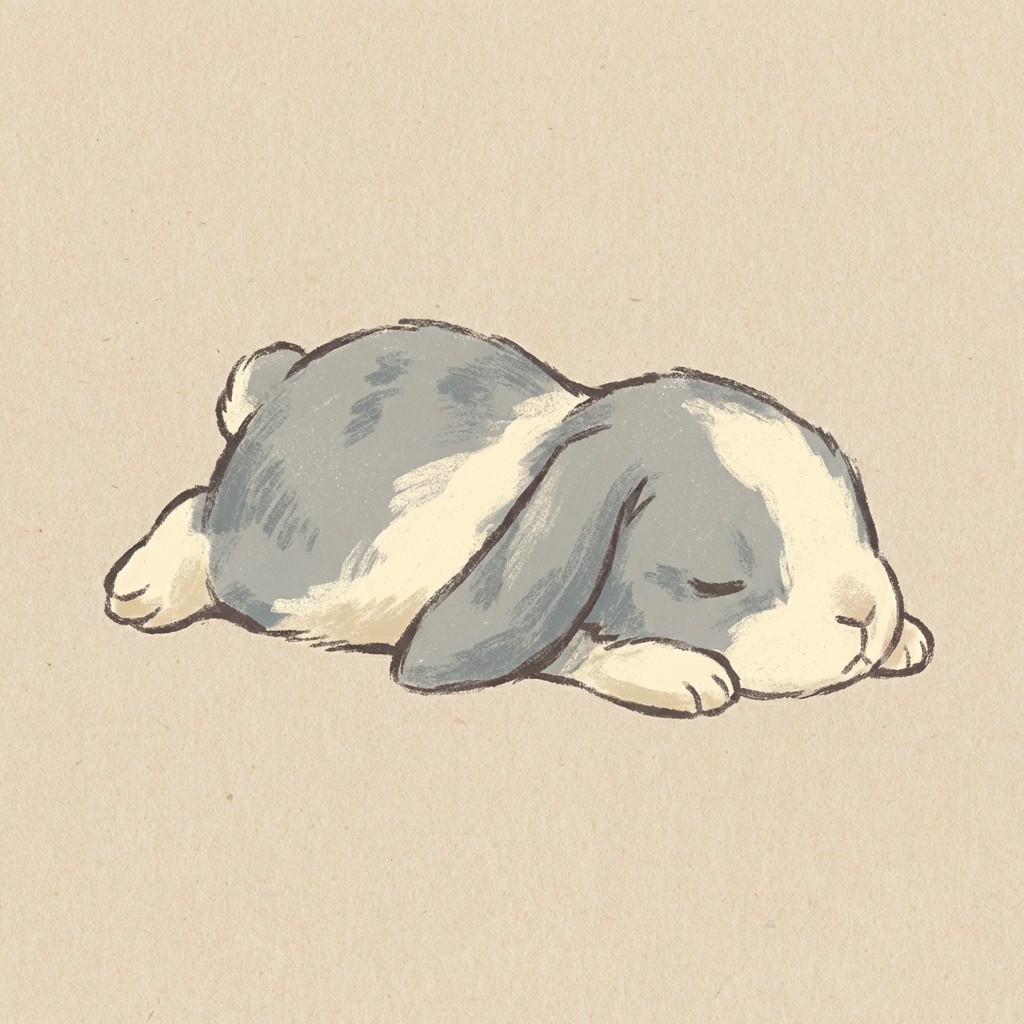
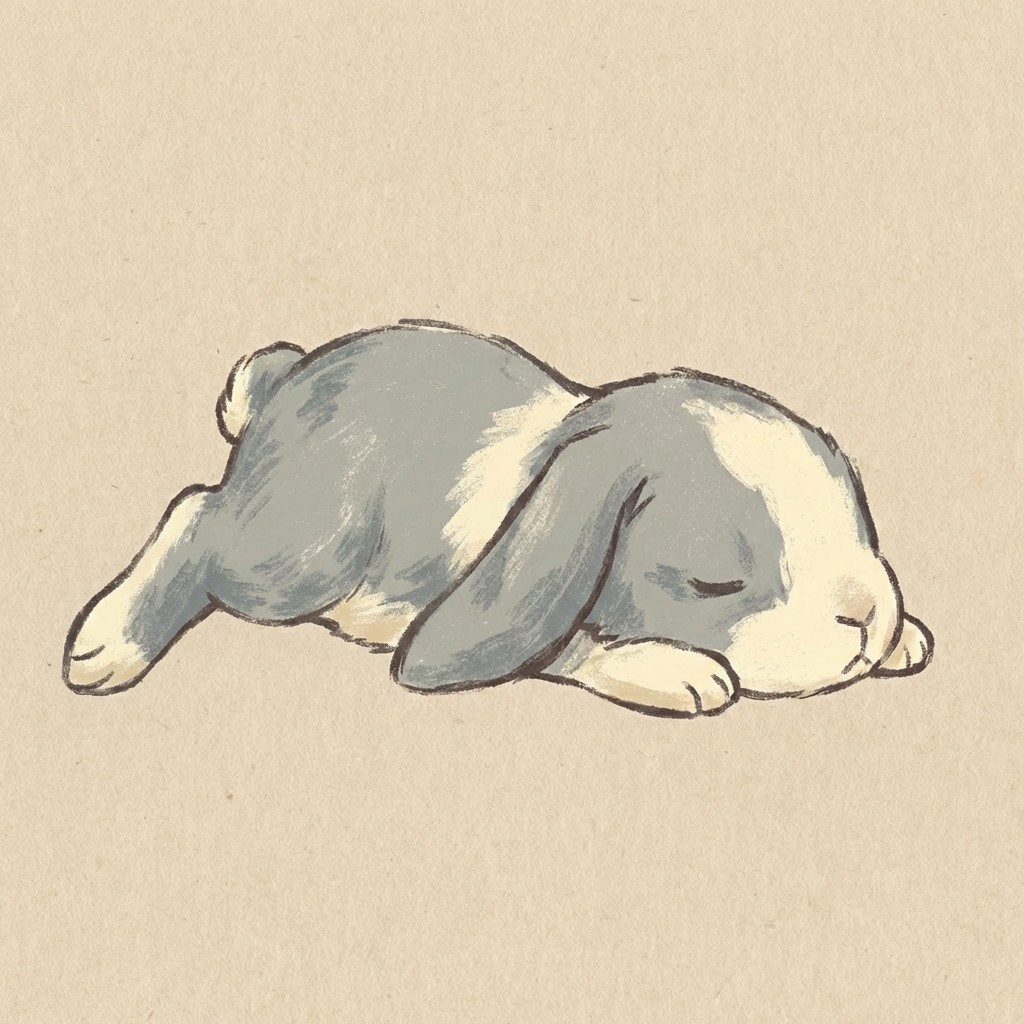
Color palette + type
Soft blue-gray primary, paired with warm gray and beige — freshness with a vintage hold. Rounded letterforms and hand-drawn textures keep it warm, never sterile.
Design for the product, not just the screen
- One mascot, many moods. Instead of a single static logo, the mascot carries the brand across seasonal collections (Christmas, autumn, everyday) — the identity stays recognizable while the product line keeps growing.
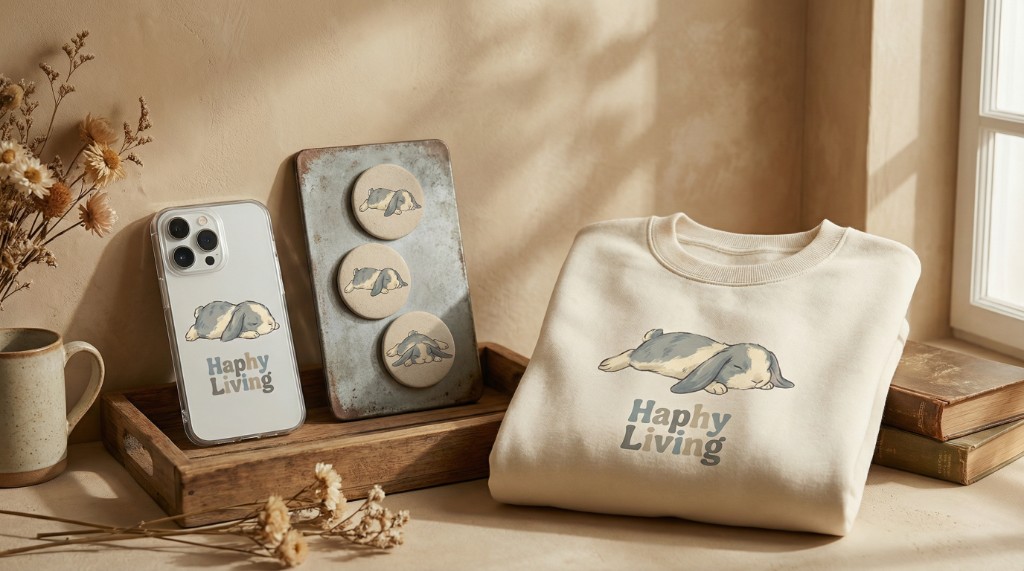
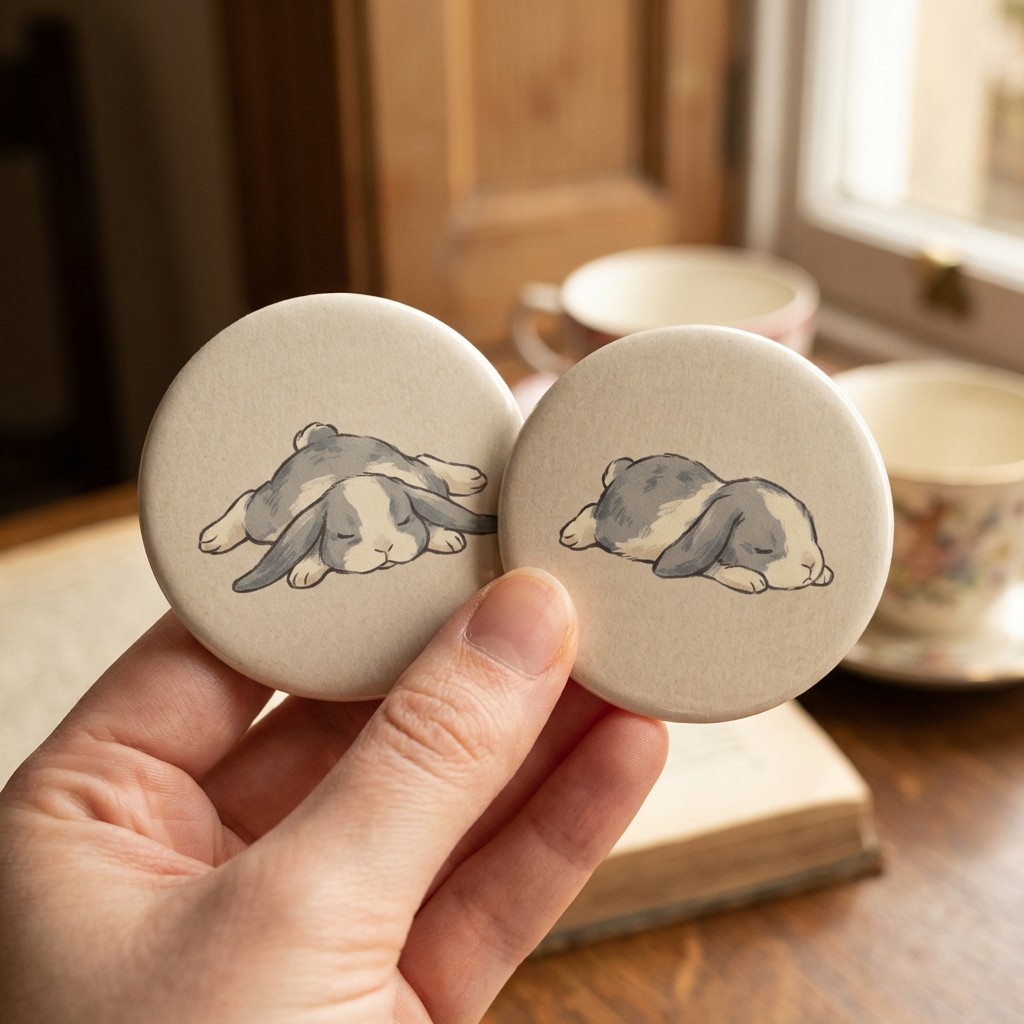
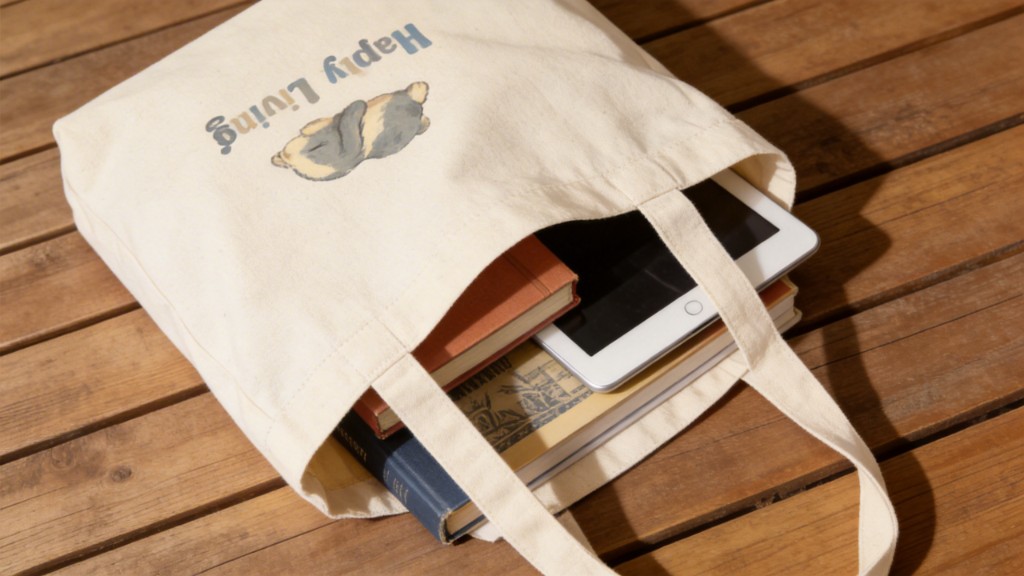
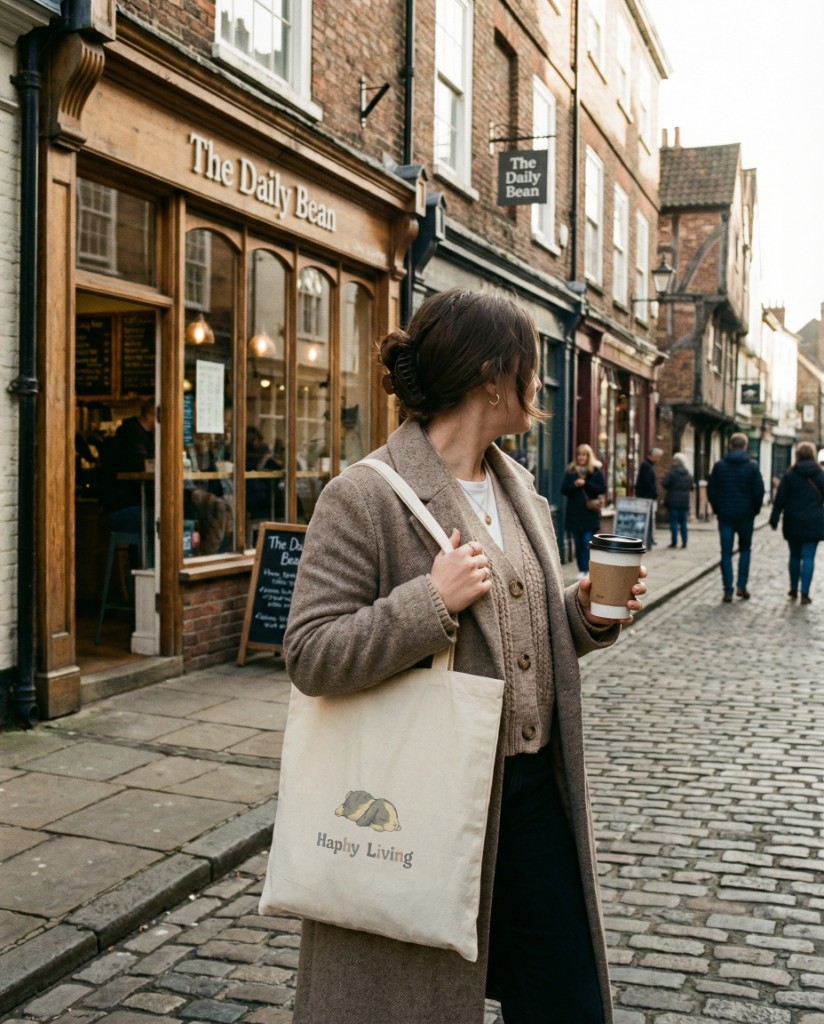
- Design for the product, not just the screen. Every artwork is built print-first: full-bleed compositions, true physical scale in mockups, and color checked against production proofs — because a design that looks good in Figma and bad on a tote isn't finished.
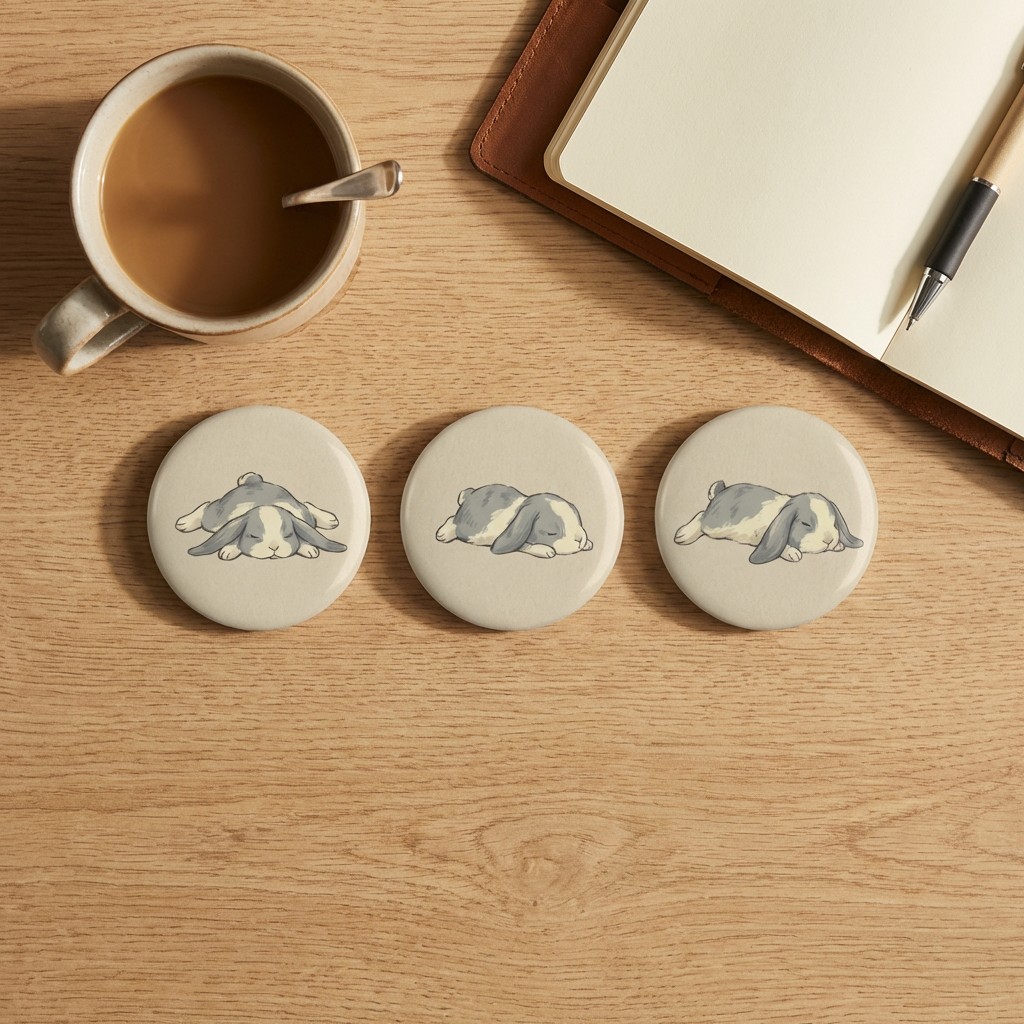
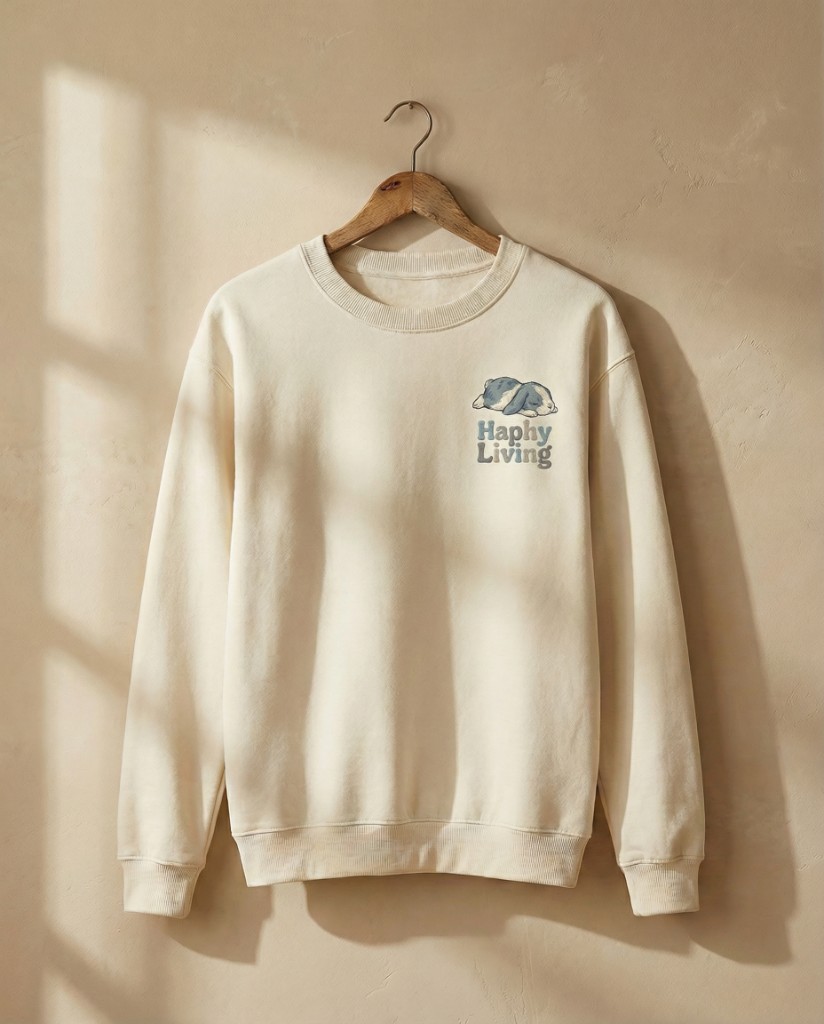
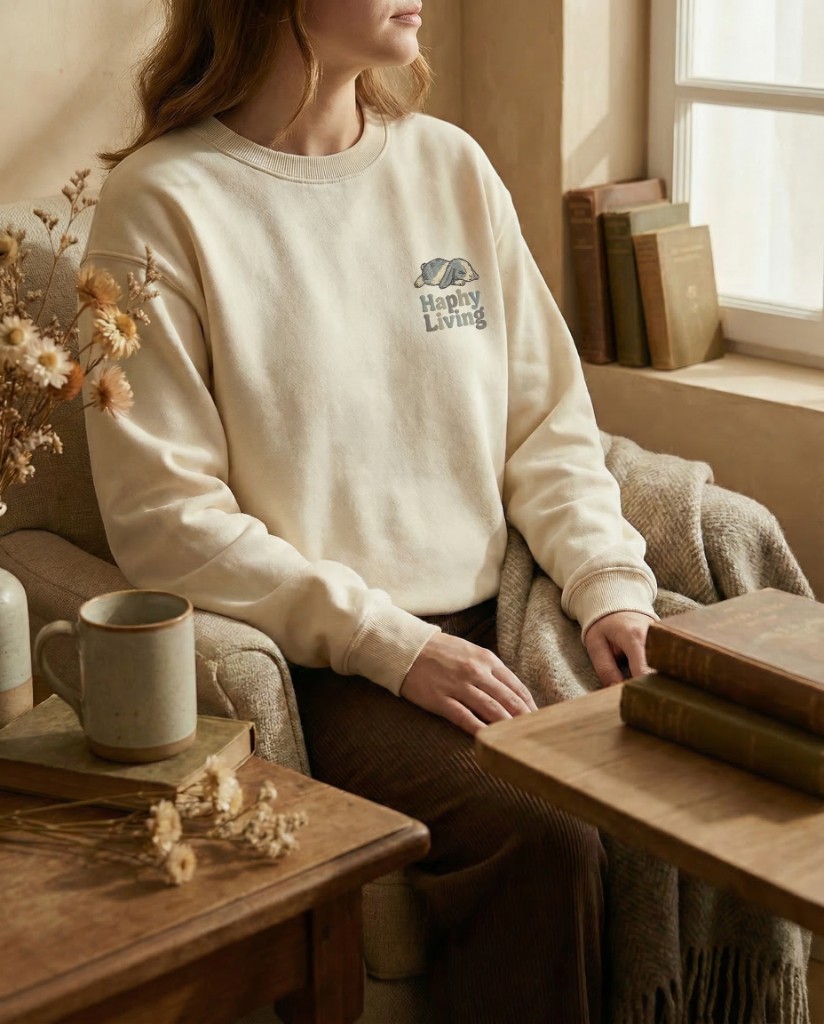
- The shop is the portfolio. Listing photography, SEO titles, and lifestyle mockups are all brand touchpoints. I treat the Etsy storefront as a designed surface, not an afterthought.
A live print-on-demand shop, designed end to end
Art prints, totes, ornaments, enamel pins, magnets, sticker sheets — every listing designed, mocked up, and optimized. Print-on-demand lets me validate demand without holding stock, then iterate with live Etsy data.
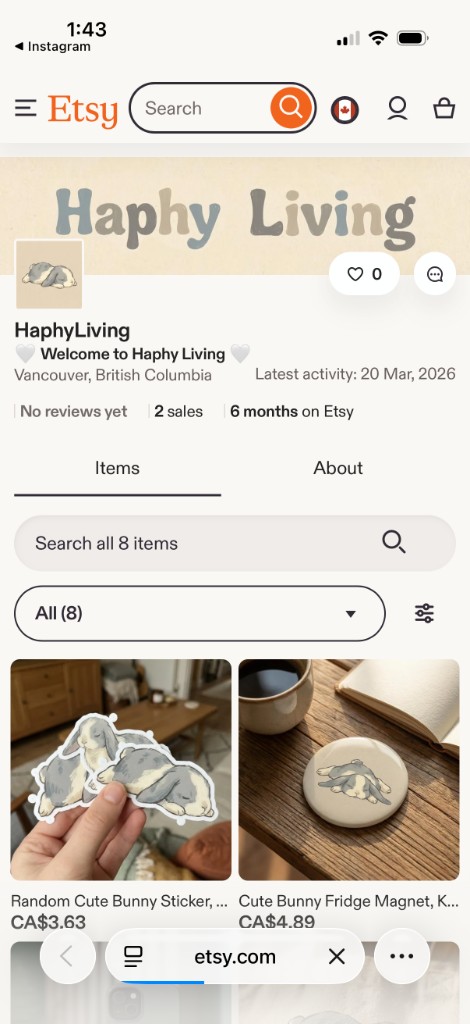
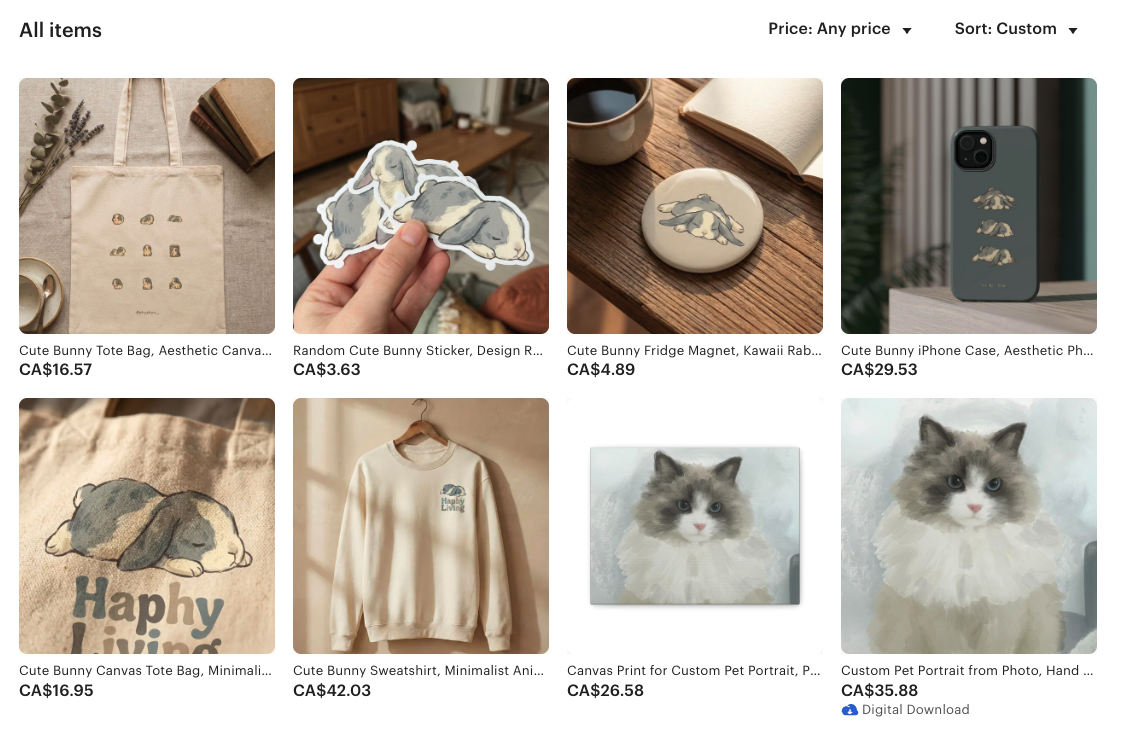
A complete, self-sustaining brand IP
Identity system, seasonal collections, and a live storefront — built solo from zero, and still growing every holiday season.